Smart Water Monitoring: Making the Invisible Visible
Using foundational research to transform an ambiguous sustainability opportunity into a funded smart-home ventureThe Challenge
The Challenge
A global leader in water and housing products, with deep expertise in plumbing fixtures and residential building systems, saw potential for a new business around water conservation and sustainability. When they came to us, the opportunity was still undefined: there was no established target customer, validated problem, or product concept.
The venture team needed to understand where meaningful unmet needs existed, which audiences experienced them most acutely, and whether those needs could support both a valuable product and a viable business. This meant identifying the right problem before deciding what to build.
My Role
Research strategy · Research leadership · Foundational research · 0→1 product strategy · Business validation
As the research lead, I guided the research strategy and team from initial opportunity exploration through concept development, product and business validation, and investment preparation.
I identified and prioritized the assumptions we needed to test, determined the research required at each stage, led synthesis and interpretation, facilitated research-informed workshops, and translated customer evidence into recommendations and actionsfor the broader venture team. My role was to help the team determine what we needed to learn next and how that evidence should influence the opportunity, product, value proposition, and business, all while keeping true customer needs at the forefront.
The Approach
We began broadly exploring water-use challenges across residential properties in water-stressed markets, including California, Arizona, and Texas. Our research included homeowners, property owners, sustainability-conscious consumers, early adopters, and professionals working in building design and water-related systems. Through assumption mapping, customer discovery, expert interviews, and qualitative synthesis, we investigated how people experienced household water consumption, where existing solutions fell short, and which problems represented meaningful opportunities for innovation.
Research revealed a fundamental disconnect between people’s interest in conservation and their ability to act on it. Household water consumption issues were largely invisible. Many consumers did not know how much water they used, what normal consumption should even look like, or why their bills changed. Even when a bill seemed unexpectedly high, they often lacked the information needed to investigate the cause or determine what action to take, and simply continued to pay it.
We realized that encouraging conservation was starting one step too late:
People cannot meaningfully change what they cannot see or understand.
This insight reframed the opportunity from motivating people to conserve water to giving them visibility, understanding, and control over their household consumption. The first step toward conservation wasn’t asking people to change their behavior, but rather helping them see and understand it.
As the venture progressed, the research shifted from identifying the opportunity to determining what the team should build and whether it could support a viable business. I led work spanning research-informed ideation, value-proposition development, desirability testing, product validation, pricing and willingness-to-pay research, and early product-market-fit exploration.
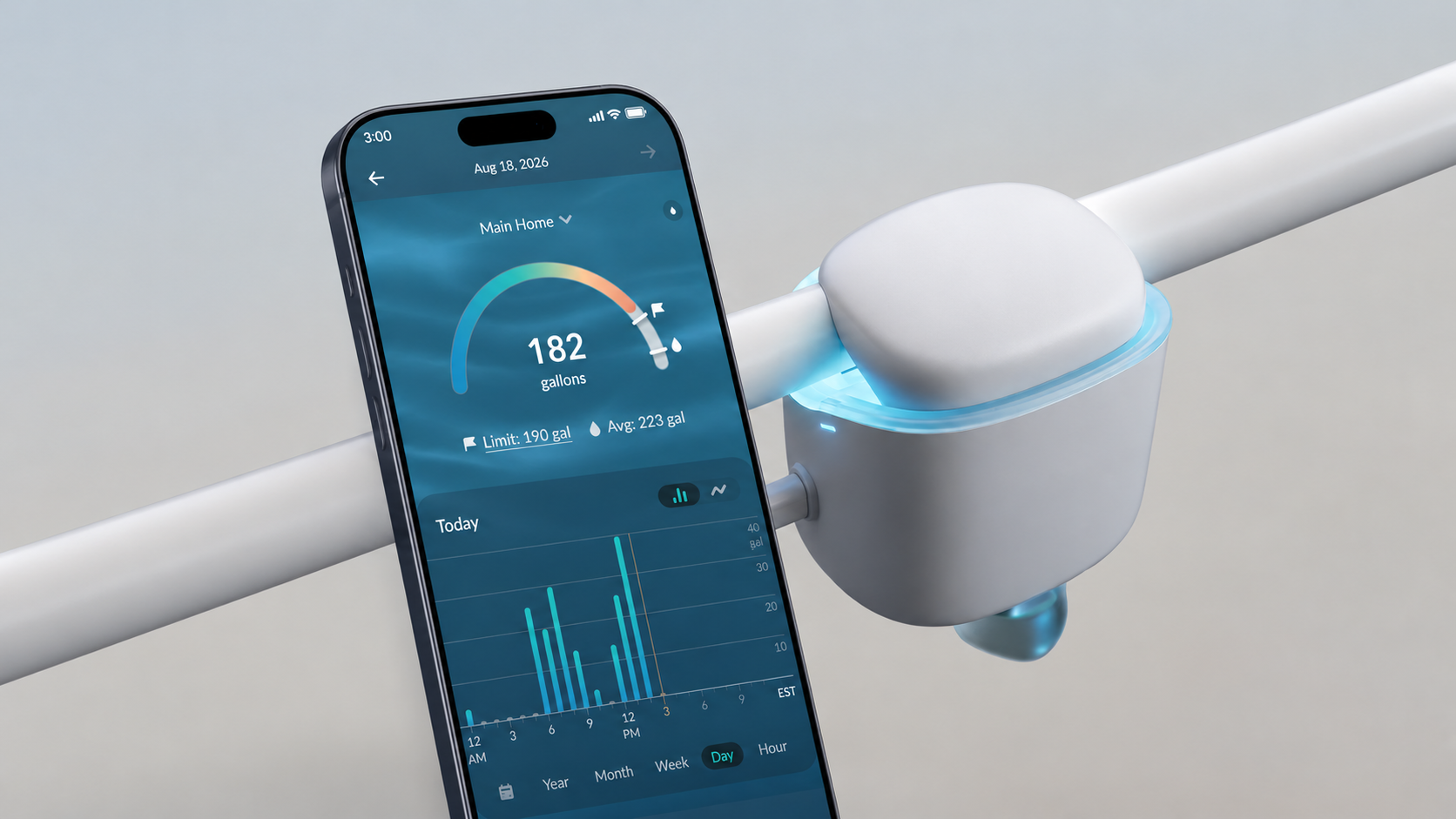
The resulting proposition combined a residential water-monitoring device with a digital experience, giving consumers greater visibility into usage patterns and unusual activity. Research helped connect the emerging product direction to a clearer customer need: not simply helping people use less water, but giving them the information required to understand where their water was going and make more informed decisions.
The Impact
The venture progressed from a broad corporate ambition around sustainability to a customer-informed smart-home product and business proposition.
Our research:
Identified a specific and actionable customer problem within a broad opportunity space
Reframed the venture around visibility, understanding, and control
Informed the product direction and value proposition
Reduced uncertainty around customer desirability and commercial viability
Contributed evidence to the venture’s business case and investment preparation
Supported the venture in securing funding from its corporate partner to continue development
This project reinforced that one of research’s most valuable contributions is not validating a proposed solution, but ensuring that a team is solving the right problem in the first place. It also deepened my understanding of behavior change. People may believe in an outcome such as water conservation without having the information, feedback, or sense of agency required to act on it. By uncovering those missing conditions, research helped turn an abstract sustainability ambition into a more concrete product and business opportunity.
Where the Venture Is Today
The venture continued to develop after my involvement, officially launching its smart-home water monitor in 2024. Its Kickstarter campaign reached its initial funding goal in just 11 minutes and ultimately raised more than $114,000 from 644 backers (over 11 times its original target). Today, the company reports that the product protects more than 15,000 homes and continues to expand its water-monitoring and leak-detection capabilities.
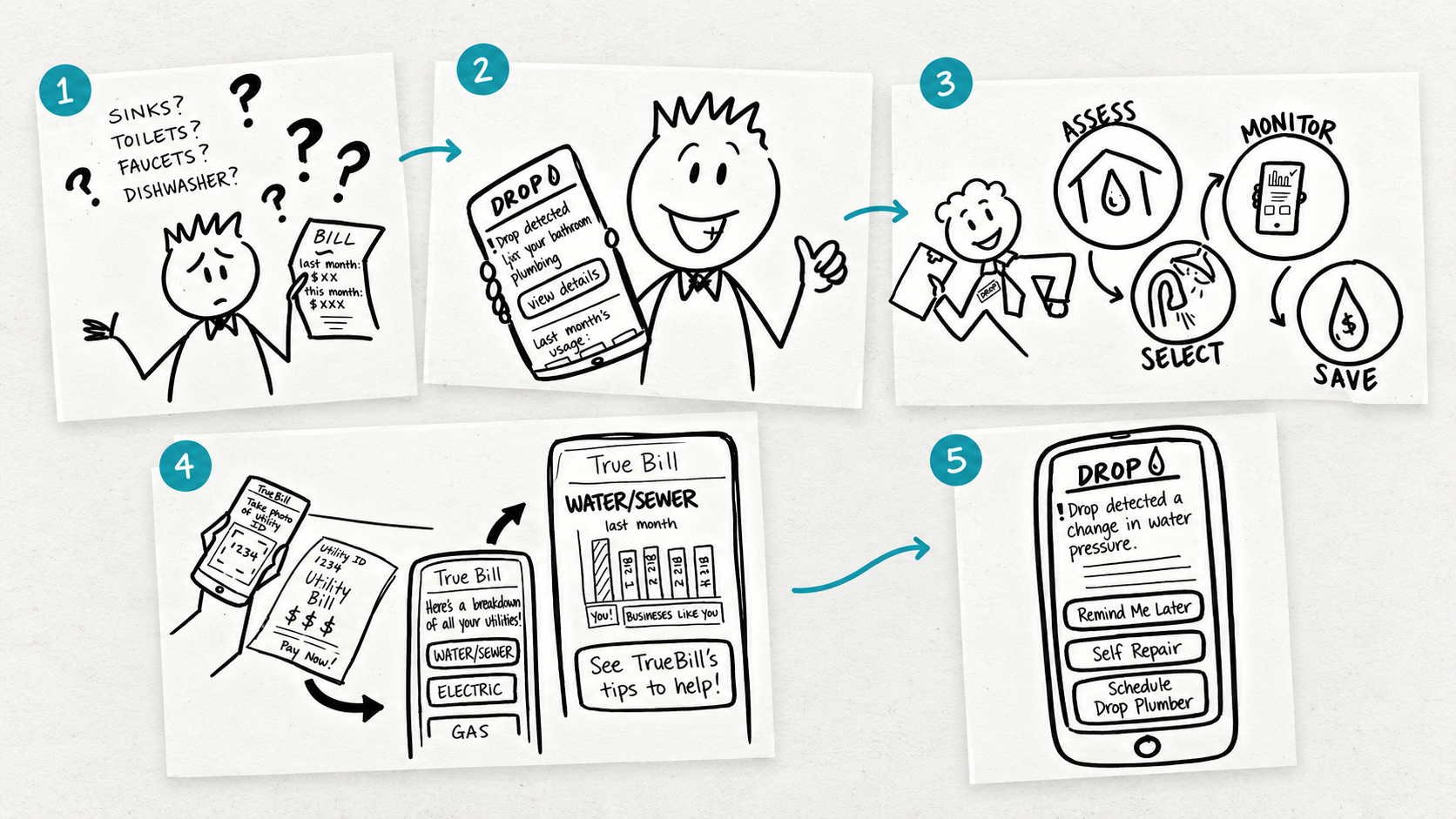
Early storyboards used for desirability testing & honing product concept