Venture Validation Platform: From Idea to Evidence
Building a guided platform for venture research and validation
The Challenge
A Fortune 500 organization wanted a more effective way to identify and evaluate potential new lines of business. Employees across the company had promising ideas, but many lacked experience with building and validating a new business: customer discovery, experimentation, and venture validation activities. The entrepreneurial employees had strong ideas, but didn’t have the knowledge or tools to move beyond their initial assumptions, and provide the organization enough evidence to determine which ideas were viable and warranted further investment.
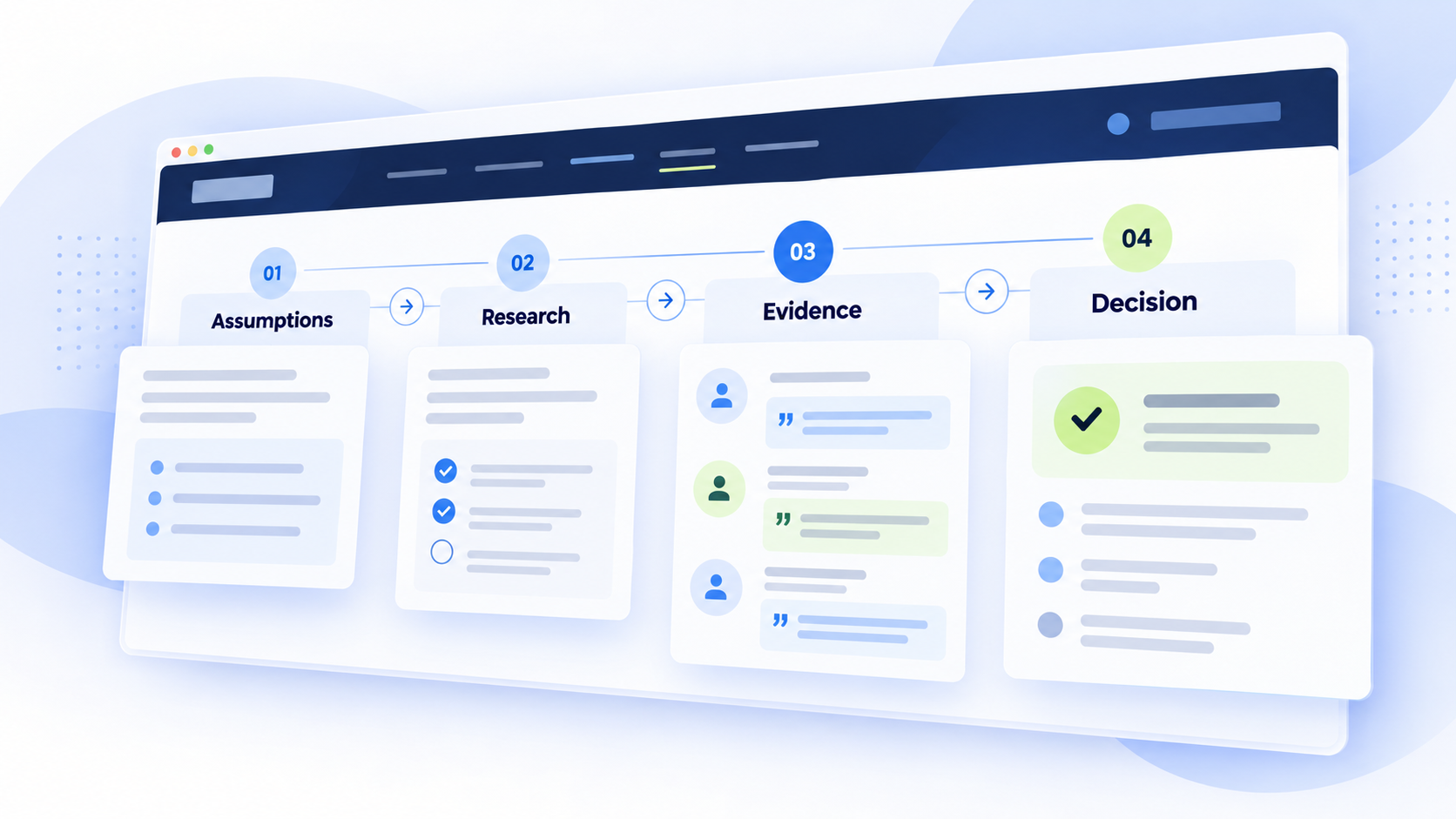
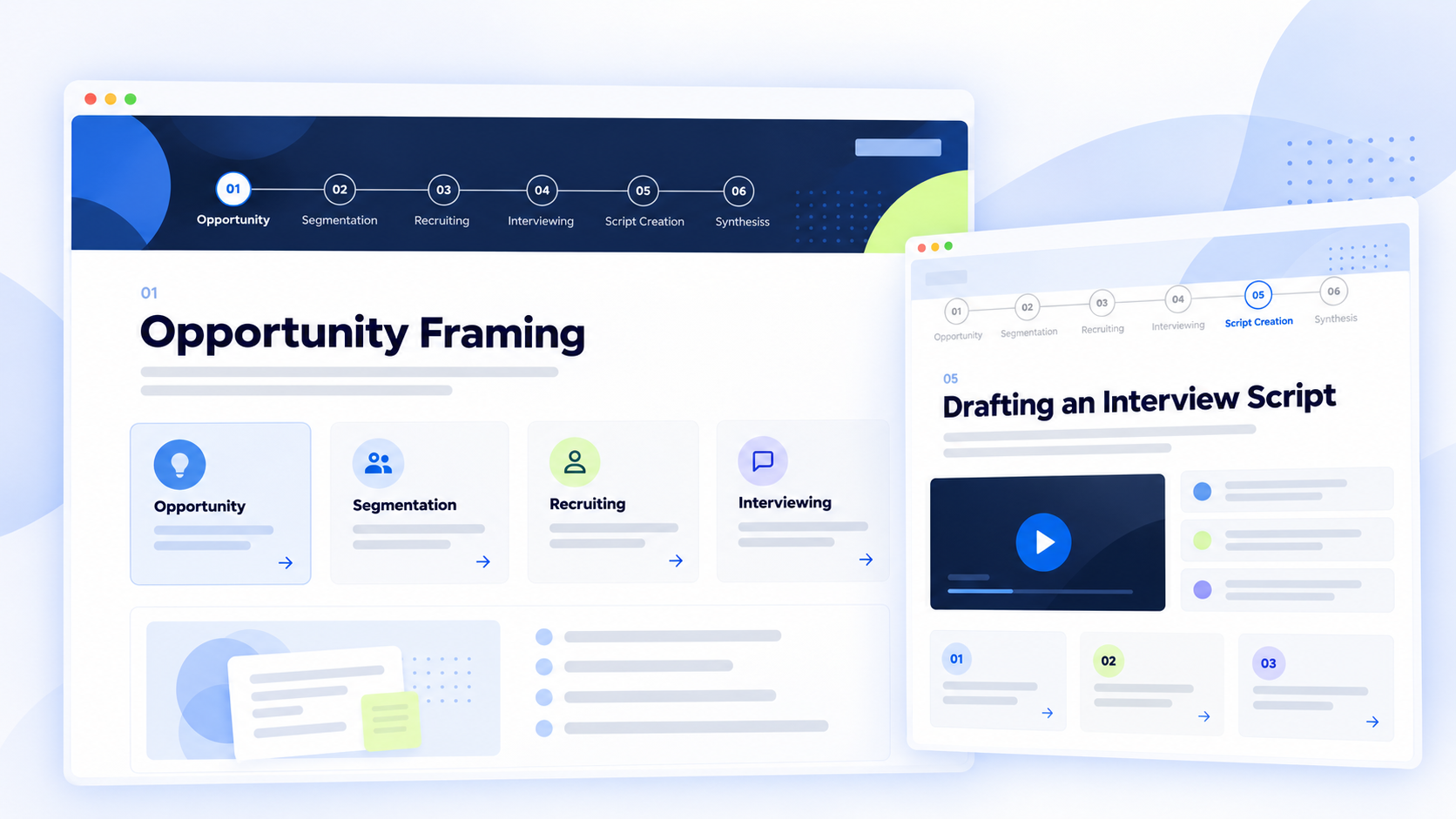
A small team of researchers and I created a digital platform that guided aspiring entrepreneurs through the foundational stages of venture building, from identifying a kernel of an opportunity and uncovering customer needs, identifying feature sets and developing a product roadmap, to testing desirability, viability, and informing the business plan. By the end of the process, teams were prepared to pitch a fully developed venture proposal grounded in rigorous research and testing, while the organization gained a more consistent, evidence-based way to evaluate submissions and determine which opportunities should advance and warranted further investment.
My Role
Research strategy · Experience design · Early PMF research · Concept testing · Usability testing
As one of the project research leads, I helped conceive the platform and co-led its development from initial concept through experience design, low- and high-fidelity testing, launch, and real user onboarding. I worked closely with research, design, internal leadership, and stakeholders across multiple client divisions to turn the idea into a functioning platform that venture teams could confidently adopt and use.
The Approach
Our approach centered on making venture research accessible without sacrificing rigor. We broke the validation process into practical activities and tested the experience iteratively, from early concepts through the higher-fidelity product. The central challenge was translating complex research and validation practices into an experience that people without formal research training could confidently use. The platform needed to provide enough structure to guide first-time innovators without turning discovery into a checklist or leading them toward predetermined answers.
We broke the venture-validation process into a sequence of practical activities. Participants learned to articulate an opportunity, identify their riskiest assumptions, test hypotheses, gather evidence from potential customers, and apply what they learned to refine or reconsider their idea.
We tested the experience iteratively as it moved from early concepts to a higher-fidelity product. Research revealed where instructions felt too academic, where participants confused assumptions with findings, and where they needed more context or examples to move forward to get to the impactful outcomes needed.
These findings shaped both the product experience and the organization’s approach to evaluating submissions. We simplified research terminology, made complex activities more manageable, and reinforced the distinction between personal conviction and customer evidence.
The Impact
What began as a focused initiative for one client, expanded into a collaboration across multiple divisions. The completed platform provided a repeatable framework for developing and evaluating new opportunities, resulting in:
150+ venture submissions
Promising concepts advancing into incubation
More than $2 million in revenue generated for Mach49 through resulting incubations
This project reinforced that research can be more than an input into product development, it can become infrastructure for better decision-making. By helping teams make their assumptions explicit and test them consistently, the platform enabled aspiring entrepreneurs to strengthen their ideas while giving leadership more credible evidence for evaluating where to invest.
It also showed me that making research accessible does not have to dilute its rigor. With the right structure and guardrails, research can expand who is able to learn from customers, reduce uncertainty earlier, and help organizations pursue new opportunities with greater confidence and less risk.